How to Measure and Hang Blackout Curtains
Last updated: October 7, 2026
Cali's Cart is reader-supported. When you buy through our links we may earn a commission, at no extra cost to you. As an Amazon Associate I earn from qualifying purchases. Learn more
Blackout curtains can transform a bright bedroom into a restful retreat, but their effectiveness depends entirely on how you measure and hang them. Light leaks around the edges—at the sides, top and bottom—are the most common frustration, and they’re almost always the result of panels that are too narrow, a rod that’s too short, or a length that leaves gaps. The good news is that with accurate measurements and a few strategic choices, you can block far more light and create the dark, private space you’re after.
This guide walks you through the process step by step: how to measure your window, how much extra width and height to add, where to position your rod, and what to check on the listing before you buy. Whether you’re setting up a nursery, working night shifts, or simply want a darker bedroom for better rest, these practical tips will help you get the most out of your blackout curtains.
In short
- Measure your window width and add extra on each side so panels overlap the frame and reduce light leaks
- Mount the curtain rod above the window frame and extend it past the frame on both sides
- Choose a curtain length that reaches the windowsill, just below it, or all the way to the floor depending on your room and style
Measure your window width and add extra for overlap
Start by measuring the width of your window frame from outside edge to outside edge. This is your baseline, but it’s not the width you’ll use to choose curtains. To block light effectively, your curtain panels need to extend past the frame on both sides, overlapping the wall and covering any gaps where light sneaks in. Add extra width on each side so the panels overlap the frame generously.
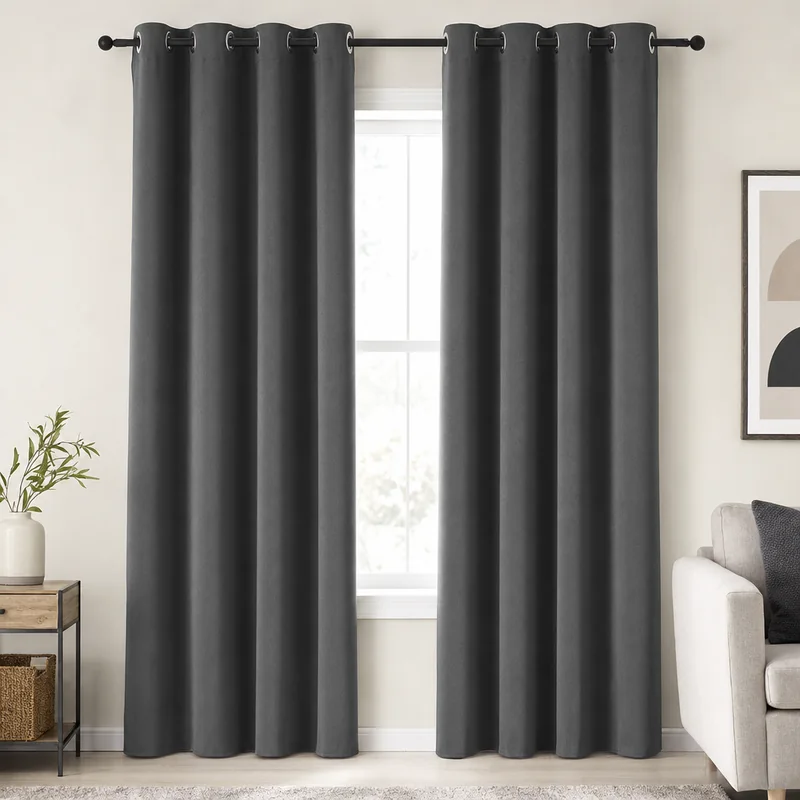
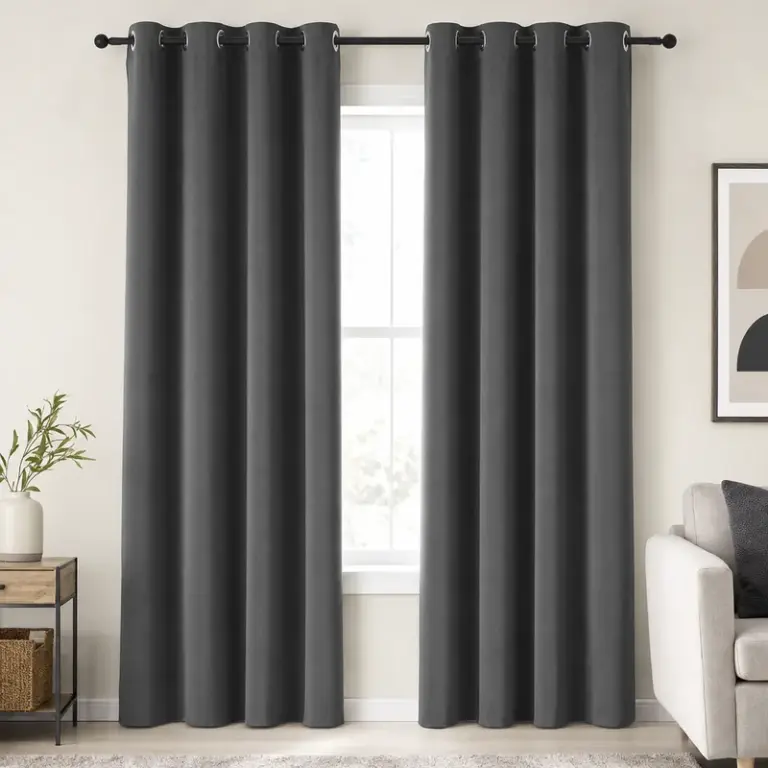
Remember that blackout curtains are sold as pairs or single panels, and the width stated on the listing is usually per panel, not the total width of the set. For example, the NICETOWN Blackout Curtains (2 Panels) list each panel as 42 inches wide according to the listing, so a pair gives you 84 inches of fabric in total. Check the listing carefully to confirm whether the width is per panel or for the entire set, and make sure the combined width of your panels is wider than your window plus the overlap you’ve planned.
Decide on the curtain length: sill, below sill or floor
Curtain length affects both the look of your room and how much light gets through at the bottom. Measure from where you plan to mount the rod (more on that in the next section) down to your desired endpoint. The three most common lengths are sill length (the curtain just reaches the windowsill), below-sill length (the curtain hangs below the sill), and floor length (the curtain reaches the floor or puddles slightly). For maximum light blocking, below-sill or floor-length panels work best because they cover the gap at the bottom of the window.
If you’re measuring for floor-length curtains, measure from the rod position to the floor and subtract a small amount so the fabric doesn’t drag or collect dust. If your floors are uneven, measure in a few spots and use the longest measurement. Keep in mind that blackout curtains may arrive wrinkled and could shrink slightly if you wash them, so check the care instructions on the listing and consider the fabric before you finalize your length.
Mount the rod above and beyond the window frame
Where you position your curtain rod makes a significant difference in light control. Mount the rod above the top of the window frame—this extra height lets the curtain cover the gap at the top and makes your window look taller. Extend the rod past the frame on each side so the curtains can be drawn fully open without blocking the glass, and so they overlap the wall when closed.
If light leaking at the top is a concern, you can mount the rod even higher, closer to the ceiling, and choose longer panels to compensate. Some curtain rods or ceiling-mounted tracks curve the curtain back toward the wall, further reducing side gaps. Make sure your rod and brackets are rated for the weight of your curtains—blackout panels are typically heavier than sheer or lightweight fabrics because of their dense weave or lining.
Check the panel width per panel versus total width
This is where many setup errors happen: a listing might state a width, and it’s not always immediately clear whether that’s the width of one panel or the width of the pair. Most blackout curtains are sold in sets of two panels, and the width given is per panel. That means if you buy a set with two panels at the stated width each, you have double that width in fabric in total to cover your window and the wall on either side.
Before you add a set to your cart, read the listing carefully and look at the product dimensions. If you’re unsure, check the product photos or the description for clarification. Measure your window, add your desired overlap, and make sure the combined width of your panels will cover that span. If your window is especially wide, you may need two sets of panels or a single extra-wide panel if the brand offers one.
Common mistakes to avoid
One of the most common mistakes is buying panels that are too narrow, either because you measured only the window glass instead of the frame, or because you didn’t account for the overlap needed to block side light. Another frequent error is mounting the rod too close to the window—if the rod sits right at the top of the frame, the curtain won’t cover the gap above it, and light will pour in. Measure from where the rod will actually sit, not from the top of the frame, when you’re calculating length.
Blackout curtains may arrive wrinkled and need steaming or a low-heat iron before they hang smoothly. If you wash them, follow the care instructions on the listing—some fabrics shrink, and you don’t want to end up with panels that no longer reach the floor. Finally, don’t assume that all blackout curtains block all light; effectiveness depends on the fabric, the fit, and how well you’ve sealed the edges. If you need complete darkness, consider pairing curtains with a sleep mask or other light-blocking solutions.
Quick checklist before you buy
Before you finalize your order, run through this checklist to make sure you’re getting the right curtains for your space:
– Measure your window width from outside edge to outside edge of the frame – Add extra width on each side for overlap – Measure the height from where you’ll mount the rod to your desired endpoint (sill, below sill, or floor) – Plan to mount the rod above the window frame – Check the listing to confirm whether the width is per panel or total, and whether you’re buying a pair or a single panel – Verify the fabric care instructions and whether the curtains are machine washable – Look for grommet, rod-pocket, or tab-top styles that match your rod type – Check the listing for available sizes and colours if the default option doesn’t suit your measurements
If the dimensions on the listing don’t quite match your needs, see if the brand offers other sizes—many blackout curtains come in multiple widths and lengths. And if you’re between sizes, it’s usually better to go longer and wider than to risk gaps and light leaks.
When a sleep mask is a simpler solution
Blackout curtains are excellent for controlling light in a bedroom, but they’re not the only option, and they’re not always the most practical one. If you’re renting and can’t mount hardware, if your windows are an unusual size, or if you travel frequently, a sleep mask can be a simpler, more portable way to block light. A well-designed mask also works as a backup on nights when even the best-hung curtains let in a sliver of light from a streetlamp or early sunrise.
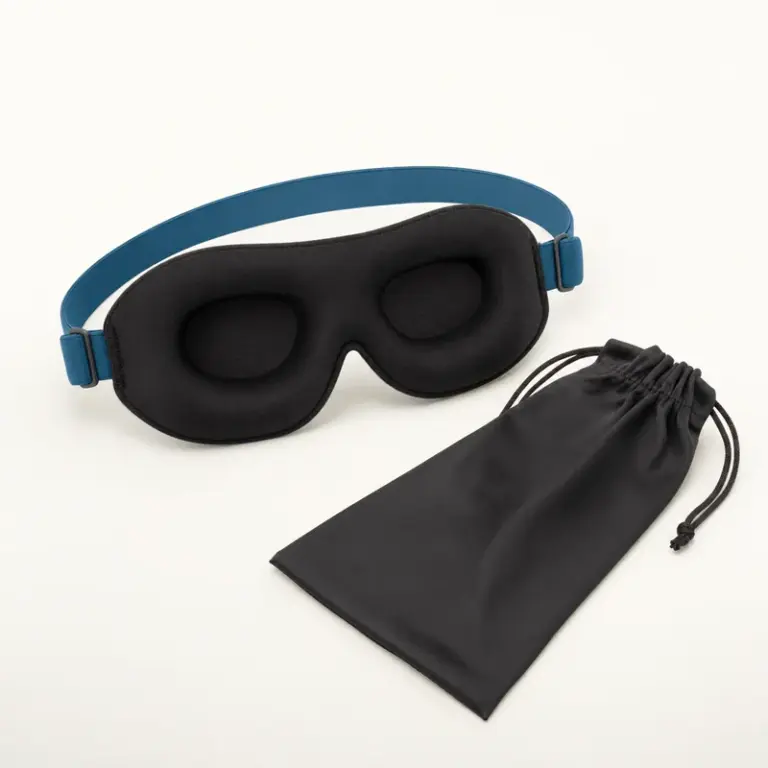
The MyHalos 3D Contoured Sleep Mask is one option our research turned up. According to the listing, it features 16 mm deep contoured eye cups made of memory foam, which the brand says are designed so the mask doesn’t touch your eyelids or lashes. It has an adjustable hook-and-loop strap and comes with a travel pouch. New York Magazine’s Strategist has included the MyHalos mask in its sleep-mask coverage. The mask is hand-wash only and weighs 60 grams according to the listing, so it’s lightweight for travel but does add some bulk compared to a flat mask. It’s sold by a third-party seller on Amazon.ca, so check the seller information on the listing. For more on choosing between curtains and a mask, see our comparison guide Blackout Curtains vs a Sleep Mask for a Darker Bedroom.
Products to compare
NICETOWN Blackout Curtains (2 Panels)
The NICETOWN Blackout Curtains (2 Panels) are a straightforward, affordable-to-mid-range option for bedrooms, nurseries, and anyone working night shifts who needs light control. According to the listing, this set includes two panels, each 42 inches wide by 63 inches long, in a triple-weave polyester fabric in grey. The grommet-top design fits standard curtain rods, and the panels are machine washable in cold water and tumble dry. The brand says the curtains offer fade resistance and privacy, and claims light blocking and thermal insulation. CNN Underscored named a NICETOWN lined blackout curtain 2-pack its best blackout curtains after testing and found it fully blocked light—that was NICETOWN’s Contemporary Lined line, which may not be this exact panel, so we can’t promise total darkness for this listing. Keep in mind that light blocking depends on proper fit and installation, and the curtains may arrive wrinkled and need steaming. The listing offers multiple sizes, so measure your window and check the dimensions carefully. Check the listing for any warranty or coverage details. These curtains suit anyone looking for a machine-washable, easy-to-hang blackout option in a standard size, but they’re not for anyone wanting sheer or light-filtering window treatments. For more bedroom ideas, see our guide Bedroom Refresh: Simple Upgrades for a Calmer Room.
MyHalos 3D Contoured Sleep Mask
The MyHalos 3D Contoured Sleep Mask is an affordable-to-mid-range alternative or supplement to blackout curtains, especially for travel, light sleepers, and side sleepers. According to the listing, the mask features 16 mm deep contoured eye cups made of memory foam, which the brand says are designed so the mask doesn’t touch your eyelids or lashes. It has an adjustable hook-and-loop strap and comes with a travel pouch. The mask measures 27.4 by 13.2 cm and weighs 60 grams according to the listing. New York Magazine’s Strategist has included the MyHalos mask in its sleep-mask coverage. The mask is hand-wash only, which is less convenient than machine-washable options, and the strap may need adjusting to get the fit right. The memory foam adds some bulk compared to flat masks, but it also provides the contouring that keeps the fabric off your eyes. This mask is sold by a third-party seller on Amazon.ca, so check the seller information on the listing before you buy. It suits anyone who wants a portable, contoured mask for travel or as a backup to curtains, but it’s not for anyone who dislikes foam bulk or prefers machine-washable masks.
NICETOWN
NICETOWN Blackout Curtains (2 Panels)
Best for Bedrooms, nurseries and shift workers seeking light control
Two triple-weave polyester panels with grommet top, designed to block light and add privacy to bedrooms.
MyHalos
MyHalos 3D Contoured Sleep Mask
Best for Travel, light sleepers, side sleepers
A contoured memory foam sleep mask with deep eye cups and an adjustable strap for travel or home use.
As an Amazon Associate I earn from qualifying purchases. How we make money
Frequently asked questions
How much wider should blackout curtains be than the window?
Your curtain panels should be wider than your window frame so they overlap the wall on each side and reduce light leaks. Add extra width on each side of the frame so the panels extend well past the window opening. Extend your curtain rod past the frame on both sides to accommodate this extra width.
Should blackout curtains touch the floor or the windowsill?
It depends on your room and how much light you want to block. Floor-length curtains or panels that hang below the sill block more light at the bottom of the window. Sill-length curtains are fine for a cleaner look, but they may let in more light at the base. Measure from where your rod will sit to your desired endpoint, and leave a small gap for floor-length panels so they don’t drag.
How high above the window should I mount the curtain rod?
Mount your curtain rod above the top of the window frame. This extra height lets the curtain cover the gap at the top where light leaks in, and it makes your window look taller. If light at the top is a major concern, you can mount the rod even higher, closer to the ceiling, and choose longer panels to match.
Do blackout curtains block all light?
Not always. How much light a blackout curtain blocks depends on the fabric, how well it fits your window, and how you’ve installed it. Even high-quality panels will let in some light if they’re too narrow, too short, or if the rod doesn’t extend far enough past the frame. For the best results, measure carefully, overlap the frame on all sides, and check the listing for details about the fabric and opacity. If you need complete darkness, consider pairing curtains with a sleep mask.